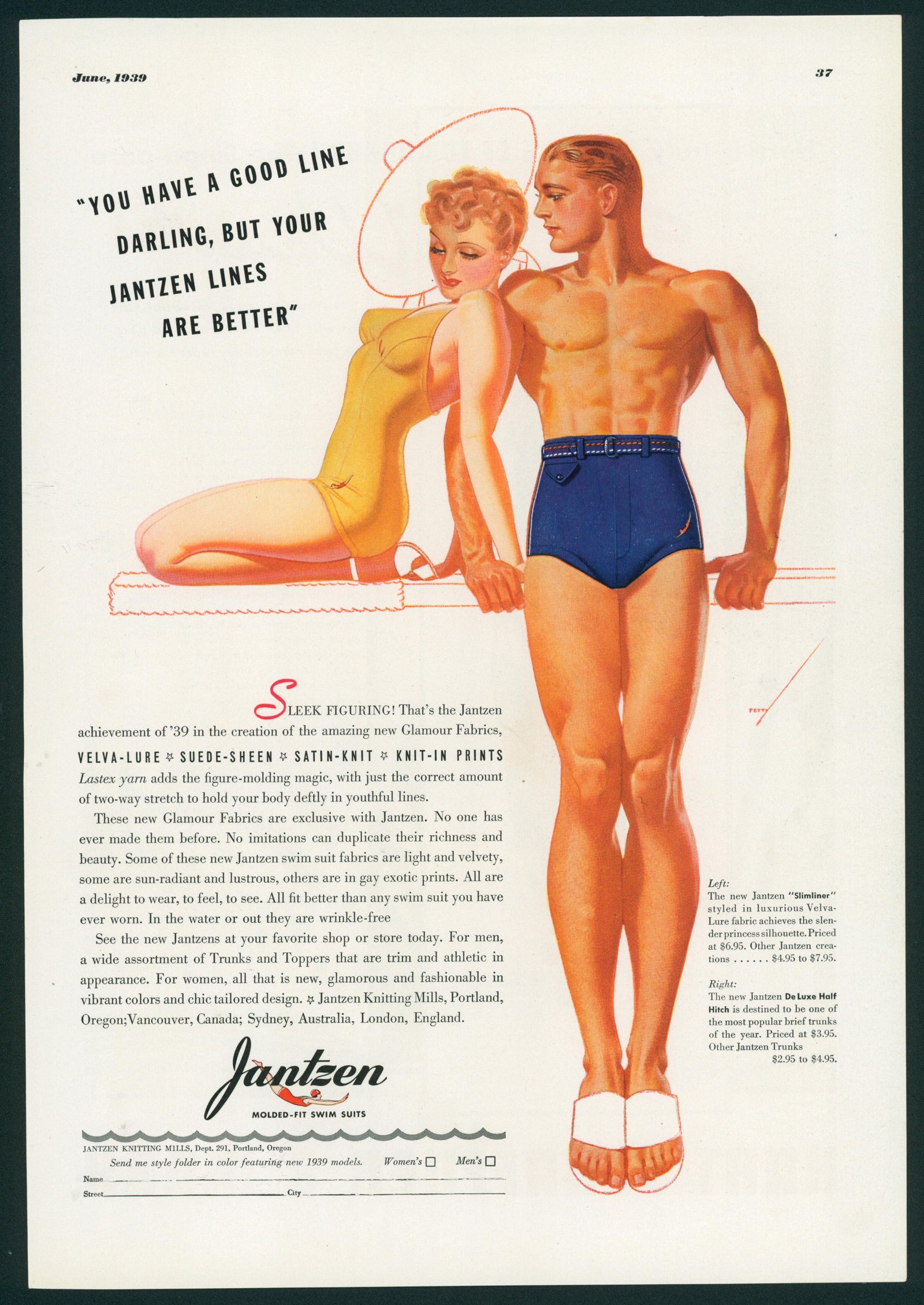

Advertising did not always look disposable. In the early twentieth century, it was authored.
Before branding agencies, marketing departments, and algorithmic optimization, individual artists shaped the visual language of commerce. Commercial art did not simply sell products, it constructed identities. Sometimes progressive. Sometimes conventional. Always revealing of its time.
Commercial art changed advertising because it introduced authorship. It replaced anonymous promotion with distinct visual identity.
To see that transformation clearly, it helps to look at three artists whose work helped define modern advertising.
Antonio Petruccelli: Corporate Modernism Becomes Brand Language


Across multiple covers for Fortune magazine, Antonio Petruccelli developed a disciplined visual vocabulary. Geometry. Order. Perspective. Calm authority.
Whether depicting boardrooms, abstracted financial systems, or stylized industrial motifs, Petruccelli’s compositions projected stability and control during volatile economic times.
By repeating this visual discipline across issues, Petruccelli helped establish consistency — what we would now call brand identity.
Commercial art changed advertising here by aligning modernist design with corporate credibility.
George Petty: Glamour, Power, and Performance


Across the Old Gold campaign, George Petty created a visual language that was instantly recognizable: elongated figures, controlled palettes, theatrical staging, and a subtle interplay of dominance and flirtation.
Petty’s women are poised, elegant, and visually commanding.
Commercial art changed advertising here by turning gender into performance. Identity became staged, stylized, and aspirational.
Victor Gillam: Satire as Mass Circulation


These provocative Judge covers demonstrate how commercial print culture could operate simultaneously as journalism, satire, and persuasion.
Commercial imagery did not merely sell goods — it shaped public sentiment.
The artistry made the argument memorable.
Why This Matters Today
When you look at three works by each artist side by side, a pattern emerges.
Consistency. Voice. Identity.
These artists were building visual systems long before the language of branding was formalized.
You are not simply acquiring an image. You are preserving a chapter in the evolution of modern visual culture.
Browse our curated collection of vintage magazine covers and advertising art, or visit our La Jolla gallery — we're always excited to help people discover these hidden gems of graphic design history.